Showing posts with label technology. Show all posts

Tuesday, August 6, 2013

Lamboo Wins Governor’s Export Award

On July 31st, 2013 Lamboo was honored by Illinois Governor Pat Quinn as the recipient for the 2013 Illinois Governor’s Export Award in the Emerging/New Export Business category.

Pictured Left, Illinois Governor Pat Quinn, congratulating Lamboo, Inc. President and CEO, Luke Schuette (Right), at the award ceremony for 2013 Illinois Governor’s Export Award on July 31st, 2013. Lamboo received the honor in the Emerging/New Export Business category.

The award recognizes the rapid growth of Lamboo’s export sales in 2012 by 63 percent over 2011. 27 percent of the company’s total sales are now attributed to exports.

“We are immensely proud to receive this award,” said Luke Schuette, founder and president of Lamboo. “The award is testimony to the growing global recognition of Lamboo as a high-performance brand and the growing interest in bamboo as a sustainable raw material for green building and design applications.”

Illinois Governor Pat Quinn handed out the award at a ceremony in Chicago.

“Lamboo’s vision is to combine high-performance technology with sustainability,” said Schuette. “We see great potential for growth as the green building and ecological innovation wave within primary industries continues to spread across the globe.”

For further information, please contact Henrik Rasmussen at 202-403-4240 or henrik@lamboo.us

Tuesday, September 11, 2012

Powering Sustainability with the World’s First Bamboo Tender Introducing the LAMBOO Tender R1

A few weeks ago Lamboo announced the design of the world’s first tender incorporating the rapidly renewable resource of bamboo, the Lamboo® Tender R1. With the Monaco Yacht Show 2012 less than two weeks away Lamboo is providing additional details on the design for individuals involved in the maritime industry and those who will be attending the show and would like to discuss the project further.

The Lamboo® Tender R1 is a revolutionary design from Sigmund Yacht Design, a leading yacht and tender design firm which has chosen Lamboo materials not only for the sustainable attributes of bamboo but for its superior performance over traditional forms of hardwood. Also included in the design is a Steyr hybrid turbo diesel engine as well as state of the art navigation, electrical, and LED lighting systems.


“This showcase is a key example of both companies’ commitment to integration of environmentally responsible methods matched with innovative engineering of performance materials into the nautical market”
said Luke Schuette, Lamboo Founder/CEO.

The construction of the R1 is being carried out by Cockwells, a pioneer within yacht and tender fabrication specializing in advanced engineering and modern construction techniques.

Executives from all three companies will be in attendance at the 2012 Monaco show and will be available for discussion on the R1 and the integration of sustainable bamboo materials within the maritime industry.

(Read full release on PRWeb)


For questions regarding Lamboo, our products, or to schedule an interview please
visit our website at www.lamboo.us or contact us at info@lamboo.us 866-966-2999

“MAKING INNOVATIVE THINKING A STANDARD” – Lamboo Incorporated

Blog by: Dustin Dennison

Tuesday, September 4, 2012

In Africa’s Vanishing Forests, the Benefits of Bamboo

In the district of Asosa, the land is thick with bamboo. People plant it and manage the forests. They rely on its soil-grabbing roots to stabilize steep slopes and riverbanks, cutting erosion. They harvest it to burn for fuel, to make into charcoal sticks to sell to city dwellers and to build furniture.

Asosa is not in China, not even in Asia. It is a district in the west of Ethiopia, on the Sudanese border. To many people, bamboo means China. But it’s not just panda food — mountain gorillas in Rwanda also live on bamboo. About 4 percent of Africa’s forest cover is bamboo.

Soon it may be much more. Bamboo may provide a solution to a very serious problem: deforestation. In sub-Saharan Africa, 70 percent of the people cook their meals over wood fires. The very poorest cut down trees for cooking fuel; those slightly less poor buy charcoal made from wood in those same forests. Every year Africa loses forest cover equal to the size of Switzerland. Terence Sunderland, a senior scientist at the Indonesia-based Center for International Forestry Research, said that in southern Africa, even trees that can be used for fine carving, such as ebony and rosewood, are being cut down and made into charcoal.

Deforestation starts a vicious circle of drought and environmental decline. Burning wood releases the carbon stored inside. And deforestation accounts for at least a fifth of all carbon emissions globally. As tree cover vanishes, the land dries out and the soil erodes and becomes barren — a major reason for Ethiopia’s periodic famines.

Hundimo Dedere owns and manages a plantation of African highland bamboo in Southern
Ethiopia that was used as a model for modern bamboo cultivation and management training.
 
 How does bamboo improve on hardwood? Cut down a hardwood tree and it’s gone. It will take several decades for another to grow in its place; it can take a century for a forest to grow back after cutting. But bamboo is a grass, not a tree. Under the right conditions, it can grow a full meter a day — you can literally watch it grow. It is also fast maturing. A new bamboo plant is mature enough to harvest after three to six years, depending on the species. Most important, bamboo is renewable. Unlike hardwood trees, bamboo regrows after harvesting, just as grass regrows after cutting. After it is mature, bamboo can be harvested every single year for the life of the plant.

Bamboo has other advantages. Its roots grab onto soil and hold it fast. Plant bamboo on a steep slope or riverbank and it prevents mudslides and erosion. And bamboo is parsimonious with Africa’s most precious resource: water.

“In Africa you want everything,” said Dr. Chin Ong, a retired professor of environmental science at the University of Nottingham in England, who was formerly a senior scientist at the World Agroforestry Center in Nairobi. “You want firewood, you want to reduce erosion, to maintain the water supply, generate cash and employment. Bamboo comes the closest — it gives you the most things.”

In the last five years or so, Ong said, Ethiopia has realized that bamboo is a more profitable and greener solution. INBAR’s program is a four-year project financed by the European Commission and the Common Fund for Commodities, a United Nations organization. The technology comes from China. The project provides bamboo seedlings and trains people to manage bamboo plantations.

Because bamboo requires few nutrients, it can grow in soil inhospitable to other plants — not only does it thrive there, it can reclaim the land so other plants can thrive, too. Its roots leach heavy metals from the soil, hold the soil together and draw water closer to the surface. One example is a project in Allahabad, India, to reclaim land whose topsoil had been depleted by the brick industry. In 1996, an INBAR project planted the land with bamboo. Five years later, villagers could farm the land again. Dust storms — a local scourge — were greatly reduced. The bamboo also helped raise the water table by seven meters. In 2007, the project won the global Alcan Prize for Sustainability.

Bamboo's tensile strength makes it a good construction material, and it is also used for furniture, flooring and textiles, among other things.

In some ways, the challenge in Africa is not to introduce bamboo, but to persuade people and governments that it has commercial uses. “We’ve taken policymakers from Africa to China and India where bamboo used in everyday life — and there’s still very poor adoption,” said Ong.

(Read More)

(Excerpt of article by Tina Rosenberg of the New York Times. NOT AFFILIATED WITH LAMBOO) 
 
  
Lamboo strives to protect and promote this remarkable resource by working with various international organizations to ensure that the bamboo used in our products is sourced from responsibly managed bamboo plantations and nurseries. Additionally all bamboo used for Lamboo products come from a select list of bamboo species that is not used as a food source by wildlife. If you want to learn more about Lamboo’s commitment to sustainability, please contact us here.

For questions regarding Lamboo, our products, or to schedule an interview please
visit our website at www.lamboo.us or contact us at info@lamboo.us 866-966-2999

“MAKING INNOVATIVE THINKING A STANDARD” – Lamboo Incorporated

Blog by: Dustin Dennison


Monday, August 27, 2012

Sustainable Building Certifications: LEED

Sustainable building certifications have been gaining momentum for several years now and data centers are jumping on board in increasing numbers. You have seen data center operators such as RagingWire, Apple and Digital Realty achieve the U.S. Green Building Council’s LEED Certifications and/or the EPA’s Energy Star for Data Centers. Many data center operators aren’t sure which certification to pursue, or if they should pursue one at all. In order to make this decision a little easier, I have provided a synopsis of each certification and their pros and cons to help guide you toward your sustainable goals.


What is LEED?

LEED stands for Leadership in Energy and Environmental Design and is a third-party certification program developed by the U.S. Green Building Council (USGBC) in 2000. It has undergone many iterations and is now operating under LEED 2009. The certification process provides independent validation of a project’s green features and verifies that the building operates the way it was designed.

LEED Certification Process

LEED uses a points based system to achieve certain certification levels recognizing the effort and commitment by the owner and project team. There are four LEED certification levels with point requirements ranging from Base (40-49 points) to Platinum (80+ points).

At last count, there were 13 data centers that had received LEED Platinum certification.
LEED points are weighted by impact on energy efficiency and CO2 reduction. As an owner/end-user, your first decision is which LEED rating system you intend to pursue your certification under. Data centers will fall under one of the following rating systems:
  • New Construction and Major Renovations: Includes new buildings and projects in which the majority of the building will be modified.
  • Existing Buildings-Operations and Maintenance: Addresses whole building cleaning and maintenance issues. This is generally applied to a building that is in operation, but wishes to make their operational processes more sustainable.
  • Commercial Interiors: Intended for tenant improvements within an existing structure. At least 60% of the gross building area must be modified to the intended use to qualify for this rating system.
  • Core and Shell: This system is complementary to Commercial Interiors and deals with the structure, envelope and HVAC system of the building.
Other rating systems that are not applicable to the data center industry are Schools, Retail, Healthcare, Homes, and Neighborhood Development. For the purposes of data center certification, Commercial Interiors is most frequently used.

Once your rating system is chosen, points are earned through implementing green measures in each of several categories. Each category has prerequisites that must be achieved before any points are earned. The categories are:
  • Sustainable Sites: Focuses on areas related to the overall building site such as storm water run-off, pervious pavement, and availability of public transportation.
  • Water Efficiency: Measures are established related to water conservation.
  • Energy and Atmosphere: Energy efficiency measures account for most of the points in this area, which also has the largest number of points available of any category.
  • Materials and Resources: Points are awarded in this category for using rapidly renewable materials and for sourcing materials that are manufactured within 500 miles of the site.
  • Indoor Environmental Quality: This category focuses on human comfort factors such as the ability to adjust temperature and supply fresh air.
  • Innovation in Design: This is the area in which innovation is recognized for new sustainable applications.
As you see, it is critical that the decision to pursue LEED Certification is made at the beginning of the design phase to eliminate redesign associated with tailoring materials and methods to LEED standards. During design, the project is registered with the USGBC ($450 for USGBC members and $600 for non-members) indicating your intent to pursue certification.
Also during the design phase, a worksheet indicating the credits you intend to pursue is completed. As the design progresses, credits are approved toward certification. This process continues during the construction phase as the sustainable measures are implemented and documented.

Clearly, documentation is the key to gaining credit for all of your efforts and requires constant attention. This effort should not be taken lightly and must be overseen by a LEED Accredited Professional, preferably with a specialty in the rating system you are pursuing. Documentation may take 50% or more of a team members’ time during the duration of the project.
When construction is complete, the project must be commissioned to ensure that the building operates as it was designed. Given that all data centers perform this task, no additional effort is required. Upon completion of the commissioning, all documentation is submitted for final approval and a fee is paid for certification.

The USGBC states that the average cost of certification across all rating systems is $2,000, but can be as high as $27,500 for a large project. After the submission is approved, your building can be included in the LEED registry and you receive the plaque for your building.
(Read More)

(Excerpt of article by Data Center Knowledge. NOT AFFILIATED WITH LAMBOO)

For questions regarding Lamboo, our products, or to schedule an interview please
visit our website at www.lamboo.us or contact us at info@lamboo.us 866-966-2999

“MAKING INNOVATIVE THINKING A STANDARD” – Lamboo Incorporated

Blog by: Dustin Dennison


Thursday, August 2, 2012

Boom in bamboo buildings has green benefits

GIRARDOT, Colombia — Forget steel and concrete. The building material of choice for the 21st century might just be bamboo.

This hollow-stemmed grass isn't just for flimsy tropical huts any more it's getting outsized attention in the world of serious architecture. From Hawaii to Vietnam, it's used to build everything from luxury homes and holiday resorts to churches and bridges.

Boosters call it "vegetal steel," with clear environmental appeal. Lighter than steel but five times stronger than concrete, bamboo is native to every continent except Europe and Antarctica.

And unlike slow-to-harvest timber, bamboo's woody stalks can shoot up several feet a day, absorbing four times as much world-warming carbon dioxide. "The relationship to weight and resistance is the best in the world. Anything built with steel, I can do in bamboo faster and just as cheaply," said Colombian architect Simon Velez.

(Excerpt of article by NBCNEWS.com. NOT AFFILIATED WITH LAMBOO)


As the first manufacturer of certified structural grade bamboo, Lamboo is preparing for the shift in sourcing of construction materials from traditional sources such as timber to more rapidly renewable sources to meet the growing demand the future undoubtedly will bring. Although bamboo grows remarkably fast and requires much less effort to replenish it is still a natural resource that we must protect and use wisely if it is to be implemented as a sustainable alternative to timber. Lamboo is working internationally to cultivate land management programs across the globe to ensure that bamboo as a resource will one day reach its potential and avoid misuse that can damage the ecosystems where this remarkable plant species grows.

To learn more about sustainability efforts Lamboo is involved in please visit our website here.

For additional information about Lamboo certifications including the recent inclusion of LVB (Laminated Veneer Bamboo) in the 2012 Annual Book of ASTM Standards sign up for updates using our "Follow By Email" box at the top right hand side of this page.

...

For questions regarding Lamboo, our products, or to schedule an interview please
visit our website at www.lamboo.us or contact us at info@lamboo.us 866-966-2999

"MAKING INNOVATIVE THINKING A STANDARD" - Lamboo Incorporated


Blog by: Dustin Dennison

Wednesday, July 25, 2012

Lamboo, Inc. partners with Max-R for sustainable bamboo product


(Wednesday, July 25, 2012) -- Lamboo, Inc. and Max-R announce their partnership in the integration of engineered bamboo into Max-R products. With the use of bamboo materials, Lamboo and Max-R are committed to ensure growth and development to the industry as a whole.

Max-R manufactures a variety of site-furnishings, but specializes in making waste recycling enclosures tailored for their customers' various needs and waste streams. Some of their products include modular foodservice stations, benches, planters and more.

"Using our products and seeing our products goes to show how different we are over the alternatives. The level of function they provide along with the way they look puts them on another playing field - they're really an aesthetic recycling solution. A lot of people are beginning to see our waste and recycling enclosures as furnishings not just trash bins. That's something that really sets us apart," says Mark Hammer, Executive Vice President of Max-R.


Max-R takes a bottom up, through and through approach to sustainability. They use environmentally preferable materials in their products, pure recycled plastic and now bamboo. Taking that a step further, its how they make those products - using 100% renewable energy as an EPA Green Power Partner. Max-R believes that choosing sustainable materials amount to an investment in our future and by investing in green power, they take that pledge further by affecting positive change in another way.

Lamboo, Inc. specializes in the manufacturing of engineered bamboo for structural, architectural and industrial applications worldwide. Bamboo as a lingo-cellulosic fiber can be processed into products with enormous advantages in mechanical properties. In its engineered form, laminated bamboo provides great durability, uniformity and strength.

Lamboo, Inc. CEO and Founder, Luke Schuette says, "We are pleased to see our premium products being utilized within Max-R's markets including; education, restaurants, governmental and park applications. Max-R's unique position within the market is very exciting to us and ensures Lamboo's growth. With this ongoing partnership we are excited to see our continued growth."

Lamboo recognizes the growing demand for superior products that deliver outstanding performance, while respecting our planet and our neighbors. Lamboo products are not only a superior option of traditional sources in terms of quality and performance, but are a highly sustainable option as well. Accordingly, Lamboo introduces uniformity, workability and the ease of integration that make it a great fit for any Max-R product.

Related articles:

Yahoo

JSOnline

All Voices

Digital Journal
 
Press Release provided by Vanessa Summers of Lamboo Incorporated.

For questions regarding Lamboo or our products please visit our
website at www.lamboo.us or contact us at info@lamboo.us

"MAKING INNOVATIVE THINKING A STANDARD" - Lamboo Incorporated


Blog by: Dustin Dennison

Friday, July 20, 2012

Wood architecture: as close as nature can get

In a new volume, Star-writer Philip Jodido captures the wondrous world of wood architecture. See what he found from Tierra del Fuego to North Cape, from Japan to Germany.


Wood is renewable and sustainable, solid and attractive. Wood architecture is just that - and so much more dazzling than ever thought. Woods is the material of the moment for contemporary architecture.


In a new volume readers are now able to get a glimpse of the most exciting and dynamic new uses of wood in architecture from all over the world. Like earthen architecture, the use of wood is almost as ancient as building itself. The columns of Greek temples are stylized trees. Today’s wooden buildings do all kinds of surprising things, and most of all, they are as “green” as they come.

(Excerpt of article by Philip Jodidio, of World's Luxury Guide. NOT AFFILIATED WITH LAMBOO)


Timber is rapidly being recognized for its potential as a great building material in a culture where designers are looking to other alternatives than the non-renewable resources traditionally used such as steel or aluminum. It only makes sense to start using options that we can replenish over time rather than using a finite resource; however, effective in terms of application and cost it ultimately may be. Many species of timber have attributes that make it ideal for construction and even though it is renewable many of these species take 25-50 years to reach maturity and require expensive and damaging replanting, threatening many weakened ecosystems. As we have been reporting bamboo is increasingly being recognized and used in many applications where timber has in the past providing remarkable strength, performance, and stability far exceeding anything we have witnessed with natural materials (in addition to having a growth rate of 6-8 years). Testing and forecasting by experts has led to the coining of the term "the next super material" due to Bamboo's amazing attributes and resiliency.

Lamboo is working to make these predictions come true by manufacturing the world's first certified structural grade bamboo component. Through species selection, patented adhesives, and lamination processes Lamboo is able to create bamboo panels and components that may appear very similar to traditional lumber on the outside but far exceed its performance in nearly every aspect.

For more information about Lamboo attributes please visit our Resource Library, or check out our certifications.

Lamboo interior grade panels

For questions regarding Lamboo, our products, or to schedule an interview please
visit our website at www.lamboo.us or contact us at info@lamboo.us 866-966-2999

"MAKING INNOVATIVE THINKING A STANDARD" - Lamboo Incorporated


Blog by: Dustin Dennison

Wednesday, July 18, 2012

Arnold Companies partners with Lamboo, Inc. to introduce bamboo structured reception desk collection


                                                                       Arnold Companies/Lamboo Inc. reception desk

Lamboo, Inc. and Arnold Companies announced their partnership to bring an engineered, high performance bamboo product to be used within an impressive collection of reception desks, casegoods, wall units and library furniture. With the integration of the Lamboo® Design™ series bamboo materials, Lamboo Inc. and Arnold Companies are committed to producing high quality, durable products that can provide many years of service, while still providing sustainable interior design solutions and rapidly renewable materials.

The Arnold Companies represent four independent contract furniture manufactures that have been serving the design and corporate community since 1962. Their highly versatile lines of quality products are: Arnold Furniture, Arnold Reception Desks, Arnold Kolax, and Arnold Desks. In Arnold Companies' manufacturing process, great care is taken to reduce material waste and to dispose of that waste in an environmentally friendly way. Arnold Companies incorporates the goals of sustainability into all of their business decisions by instilling a respect for the environment in their employees, and by reviewing the environmental records of the suppliers.

                                                                        Arnold Companies/Lamboo Inc. reception desk

Lamboo Inc. uses proprietary manufacturing processes to offer products at a quality that is unmatched by all within the building and design industries. Lamboo products are not only a superior option over traditional sources in terms of quality and performance, but also a much more sustainable option. Lamboo, Inc. offers a durable, aesthetically pleasing, workable product that appeals to finish carpenters, custom designers, builders, and product manufacturers wishing to use high performance bamboo.

This partnership is formed to bring innovative solutions to use the best quality custom receptionist desks for municipal projects, commercial projects and upscale residences, while maintaining a reputation of reliability and quality. Through parntership with Arnold Companies, Lamboo seeks to combine high performance bamboo products with the most advanced engineered system in the market today.


                                                                             Arnold Companies/Lamboo Inc. reception desk

For questions regarding Lamboo or our products please visit our
website at www.lamboo.us or contact us at info@lamboo.us

"MAKING INNOVATIVE THINKING A STANDARD" - Lamboo Incorporated


Blog by: Dustin Dennison


Monday, June 18, 2012

Lamboo Bamboo

Based in Springfield, Illinois, Lamboo Inc. specializes in manufacturing high-performance engineered bamboo for a variety of commercial, residential, and industrial applications.

Luke Schuette founded Lamboo in 2003. As a student of architecture at Southern Illinois University, Schuette became fascinated with structural materials and engineered wood. For his final project, he performed an analysis on engineered bamboo for structural applications, and became passionate about the material.

In 2007, Schuette, successfully petitioned the American Society for Testing and Material (ASTM) to revise their standard, D5456, to include the evaluation of laminated veneer bamboo for structural use. He now serves as the Chairman of D07.02.03 at ASTM International.

As a result of his educational background, Schuette’s natural target market is architects, who can specify Lamboo in their building projects. They can then order products from Lamboo’s nearly 30 partners, who offer high-performance bamboo windows, doors, curtain walls, tables and countertops, structural systems, moveable glass doors, and interior and exterior panels. Lamboo’s partners span many sectors, and include NanaWall, Kolbe, Solarlux, Western Structures, Inc., Oversee Yachts, Dover, and Redbud Ridge.

Lamboo also sells panels and finished grade components directly to general contractors and carpenters.

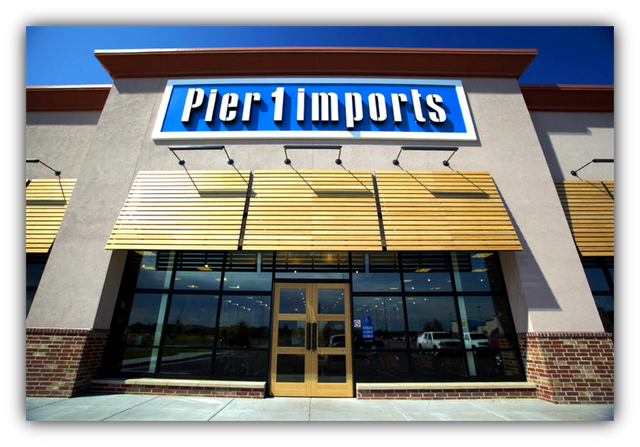
One of Lamboo’s most notable clients is Pier 1 Imports, who has refitted close to 100 of their stores’ entryways with Lamboo bamboo awnings and doors (through partnership with Kolbe). The company plans to update 800 of their 1200 stores with the product.

Benefits of Lamboo Bamboo

Bamboo is a rapidly renewable material, meaning that its harvest cycle is 10 years or less. In fact, Lamboo has hand-picked 6 of the 1600 species of bamboo, which it believes are the best for both high performance and sustainability. These species have harvest cycles of 6-8 years, and is considered to be a low embodied energy material with an excellent life cycle as compared to other materials such as plastics and fiberglass. In comparison to a traditional forest, a bamboo forest produces six times the amount of material per acre per year and sequesters 35% more carbon.

In comparison to traditional wood, bamboo is ten times stronger in tension and over three times stronger in general mechanical properties. However, it has the same thermal properties of wood, meaning that in glass applications, it is more energy efficient than aluminum, vinyl, plastics, steel, and other alternatives.

Additionally, the materials has low VOCs and formaldehyde, making it ideal for indoor air quality.
 
LEED Credit Overview

According to the LEED for New Construction 2009 rating system, Lamboo bamboo can contribute to the following credits:

Materials and Resources (MR) Credit 6, Rapidly Renewable Materials (1 point):

This credit requires that 2.5% of the total value of building materials are rapidly renewable, which means that they can be harvested in 10 years or less.

Indoor Environmental Quality (IEQ) Credit 4.4, Low-Emitting Materials - Composite Wood and Agrifiber Products (1 point):

This credit requires that composite wood products, agrifiber products, and laminating adhesives contain no added urea-formaldehyde.

Lamboo could also potentially contribute to the Innovation in Design category as an Environmentally Preferable Material and/or Life Cycle Assessment/Environmental Impact.

(Read more)

(Excerpt of article by Claire Moloney of Green-Buildings.com.


For questions regarding Lamboo, our products, or to schedule an interview please
visit our website at www.lamboo.us or contact us at info@lamboo.us 866-966-2999

"MAKING INNOVATIVE THINKING A STANDARD" - Lamboo Incorporated


Blog by: Dustin Dennison

Tuesday, June 12, 2012

Green Building Materials

Attributes that help determine if a building material is “green” include whether the product is - natural - renewable - non-toxic - made of recycled materials - produced locally - reusable - certified sustainable. A material does not have to have all these attributes to be considered green, but, in general, the more of these attributes it does have the better.

BAMBOO

Bamboo is one of the earth’s fastest-growing plants and can be grown without the use of fertilizers or pesticides. While most trees typically need decades to grow before they can be harvested, bamboo requires only four to six years. Bamboo has also been reported to sequester 35% more carbon than trees, making it attractive in the battle to reduce atmospheric carbon dioxide levels. Because of these qualities, bamboo has become a popular material for use in a variety of green products.

Not all bamboo is the same. Luke Schuette, president of Lamboo®, Inc., notes, “there are nearly 1600 species of bamboo worldwide. Some are soft while others are very dense.” To engineer a laminated bamboo product suitable for structural use in buildings, including horse barns, Lamboo, Inc. uses five species of bamboo that are harder than wood. “The structural capacity of Lamboo,” says Schuette, “is over three times stronger on average than wood.”

In addition to considering the strength of a material used in a horse barn, it is essential that any building material used in your barn is safe for your horse. “It’s really important to be wary of what may be marketed as ‘green’ substitutes for wood products to be sure they aren’t toxic, either in the material itself or the binding agents, and how it does or does not splinter if chewed since horses will nibble on whatever’s within reach,” notes Blackburn. According to Schuette, testing performed by Lamboo concluded it is safe for animal consumption, and horses are less likely to nibble on bamboo compared to wood.

An added benefit of Lamboo is that it burns more slowly than wood due to its increased density, making it less of a fire risk.

 (Read more)

(Excerpt of article by Josh Englander of HolisticHorse.com.

For questions regarding Lamboo or our products please visit our
website at www.lamboo.us or contact us at info@lamboo.us

"MAKING INNOVATIVE THINKING A STANDARD" - Lamboo Incorporated


Blog by: Dustin Dennison

Wednesday, June 6, 2012

Lamboo: Bamboo Made Better?

The idea behind engineered wood products (EWP) is to make wood stronger and more flexible in terms of design applications like long-spans and curved beams. Bamboo is already a highly regarded, sustainable wood species, and now one company is trying to make it better by turning the best kinds of bamboo into an EWP.


Made of thin layers of bamboo held together by adhesives, Lamboo is an engineered, high-performance bamboo product for exterior and interior applications such as beams, trusses, panels, awning systems and more. Choosing from 1,600 different species of bamboo, the company has isolated four with the strongest cellular structures to compose its Lamboo product, which is reported to be ten times stronger in tension, three times stronger mechanically, and twenty percent more stable in moisture and temperature changes compared to its wood counterparts.


And then there are the inherent advantages of bamboo itself, one of the fastest growing plants in the world. It’s an easily renewable resource and a building material that offers some of the highest strength and stability ratings. Bamboo has a warm and soft texture that has won many fans in the remodeling world. So the question is, can Lamboo improve a wood species that’s already excellent in terms of performance and sustainability? I’d like to know.

You can request a quote or order samples from the Lamboo website.

(Read more)

(Excerpt of article by Josh Englander of HGTV Remodels.

For questions regarding Lamboo or our products please visit our
website at www.lamboo.us or contact us at info@lamboo.us

"MAKING INNOVATIVE THINKING A STANDARD" - Lamboo Incorporated


Blog by: Dustin Dennison

Tuesday, June 5, 2012

NanaWall Systems Lamboo Laminated Bamboo

Glass wall technology with laminated bamboo frames

NanaWall Systems, a leader in opening glass wall technology, introduces a folding door system featuring custom-crafted frames of Lamboo laminated bamboo. The Energy Star-Certified NanaWall folding door system incorporates an ecologically responsible wood-alternative material.


Lamboo laminated bamboo was introduced at the American Institute of Architects Convention May 12-14 in New Orleans.

NanaWall Systems has achieved Energy Star ratings and Dade County Hurricane Certification. NanaWall also offers Triple Glazing and OrniluxBird Protection Glass.

“We chose Lamboo because our customers requested more ecologically responsible material to use in LEED certified projects,” says Ebrahim Nana, president of NanaWall Systems. “We already offer FSC wood but Lamboo takes the concept one step further and is recognized as a rapidly renewable resource by the U.S. Green Building Council.”

Lamboo products meet criteria for 2011 "CALGreen" A4.405.4 (Use of building materials from renewable sources) and contribute to LEED (Leadership in Energy and Environmental Design) certification under MR Credit 6 - Rapidly renewable materials, IEQ Credit 4.4 - Low-emitting materials; ID Credit 1 - Innovation in Design (Environmentally Preferable Material), and ID Credit 2 - Innovation in Design (Life Cycle Assessment / Environmental Impact).


Lamboo is available with NanaWall’s WD65 wood-framed system and WA67 aluminum-clad wood-framed system.

Lamboo is an engineered bamboo product that is not only structurally stable but aesthetically pleasing as well. The production process uses 15 percent less embodied energy than that of engineered wood and 300 percent less embodied energy than aluminum and steel. Lamboo on average is 20 percent more stable than wood in moisture and temperature changes, ten times stronger than wood in tension and three times stronger mechanically. Bamboo sequesters 35 percent more carbon than its tree counterparts and also produces 30 percent more oxygen than a like-sized timber forest area.

(Read more) 

(Excerpt of article by WorshipFacilities.com.

NanaWall Lamboo system at 2011 AIA (Video)


For questions regarding Lamboo or our products please visit our
website at www.lamboo.us or contact us at info@lamboo.us

"MAKING INNOVATIVE THINKING A STANDARD" - Lamboo Incorporated


Blog by: Dustin Dennison

Wednesday, May 30, 2012

Are Bamboo Products The Future of Retail?

It's no surprise that the growing popularity and trendiness of “green living” has given rise to an entirely new subset in the global retail industry. With new and recent demands by the public that no longer exclusively includes the extremist eco-conscious microcosm, more sustainable products in retail aimed at the widespread general population are pushing through the niche market into the mainstream.

At the heart of this exponential increase in the green retail marketplace is the material bamboo that encompasses what sustainability represents while being chameleon enough to provide every type of eco-friendly product one could demand. On top of that, Bamboo has the capabilities to produce both quality and aesthetically pleasing products that are able to capture the interest of the mainstream public who are often set in their comfortable buying patterns that can be hazardous for the environment. This combination of sustainability, durability, versatility and beauty makes one wonder that if, while the future of capitalism is sure to be green, is the future of retail rooted in bamboo? All predictions and market trends are pointing towards the affirmative with the industry expected to be worth $25 billion in 2012. What was once overlooked as a predominantly third world material or decorative piece in tropical motifs is about to tidal wave through the global retail industry. Here's why:

Sustainability
Since it can easily adapt easily to changing temperatures, climates, and soil conditions, bamboo can grow everywhere and in almost any condition except Antarctica. It is also naturally anti-bacterial, anti-fungal and anti-pest which makes the need for pesticides null and void. Bamboo produces greater biomass and 30% more oxygen than a hardwood forest of comparable size.

Renewability
Bamboo grows on average 1.6 feet per hour and reaches maturity in about five years making it the fastest growing and most renewable plant on earth. Compare this to Oak, which grows on average 12 inches per year and can take 120 years to mature. To put this in perspective, a sixty-foot tree cut for market takes 60 years to replace and a sixty-foot bamboo cut for market takes 59 days to replace.

Durability
The tensile strength, or the ability to withstand stress, of bamboo surpasses that of steel. Bamboo’s tensile strength is 28,000 per square inch, while steel rates only 23,000 per square inch. That’s why bamboo is used as a building material in areas often wrought with earthquakes.

Versatility
Bamboo is material that can and is used for almost everything. It is popular as a building material such as flooring, furniture and structures in earthquake-ridden areas. Bamboo products are a choice for clothing, textiles and even paper. In fact, there is not a single industry that bamboo doesn’t touch as it can even substitute for charcoal.


Restorative
Bamboo not only produces more oxygen but helps to actually reduce carbon dioxide gases faster than other plants, which can help reverse the effects of global warming. Since it is highly adaptable to most climates and soil conditions it can help restore degraded and damaged lands. It also acts as a natural water control barrier, which helps reduce rain run off and soil erosion.

Aesthetically Pleasing
Simply put, bamboo is pretty. Its universally appealing aesthetic makes it popular for both those that lean towards trendy designs and those that favor a more classic look. Bamboo products have a smooth sleek texture that is pleasing to touch and symmetrical design pattern that people like to look at. It produces soft clothing, savory food, unique looking buildings and even good-looking gadgets.

Bamboo products are the new kings of the green and environmentally friendly retail market. With its flawless reputation and ability to “do it all” the trend towards bamboo becoming the future of all retail seems imminent.

(Read more)

(Excerpt of article by Greg Voakes of Business Insider.


For questions regarding Lamboo or our products please visit our
website at www.lamboo.us or contact us at info@lamboo.us

"MAKING INNOVATIVE THINKING A STANDARD" - Lamboo Incorporated
Blog by: Dustin Dennison