Wednesday, July 18, 2012

Arnold Companies partners with Lamboo, Inc. to introduce bamboo structured reception desk collection


                                                                       Arnold Companies/Lamboo Inc. reception desk

Lamboo, Inc. and Arnold Companies announced their partnership to bring an engineered, high performance bamboo product to be used within an impressive collection of reception desks, casegoods, wall units and library furniture. With the integration of the Lamboo® Design™ series bamboo materials, Lamboo Inc. and Arnold Companies are committed to producing high quality, durable products that can provide many years of service, while still providing sustainable interior design solutions and rapidly renewable materials.

The Arnold Companies represent four independent contract furniture manufactures that have been serving the design and corporate community since 1962. Their highly versatile lines of quality products are: Arnold Furniture, Arnold Reception Desks, Arnold Kolax, and Arnold Desks. In Arnold Companies' manufacturing process, great care is taken to reduce material waste and to dispose of that waste in an environmentally friendly way. Arnold Companies incorporates the goals of sustainability into all of their business decisions by instilling a respect for the environment in their employees, and by reviewing the environmental records of the suppliers.

                                                                        Arnold Companies/Lamboo Inc. reception desk

Lamboo Inc. uses proprietary manufacturing processes to offer products at a quality that is unmatched by all within the building and design industries. Lamboo products are not only a superior option over traditional sources in terms of quality and performance, but also a much more sustainable option. Lamboo, Inc. offers a durable, aesthetically pleasing, workable product that appeals to finish carpenters, custom designers, builders, and product manufacturers wishing to use high performance bamboo.

This partnership is formed to bring innovative solutions to use the best quality custom receptionist desks for municipal projects, commercial projects and upscale residences, while maintaining a reputation of reliability and quality. Through parntership with Arnold Companies, Lamboo seeks to combine high performance bamboo products with the most advanced engineered system in the market today.


                                                                             Arnold Companies/Lamboo Inc. reception desk

For questions regarding Lamboo or our products please visit our
website at www.lamboo.us or contact us at info@lamboo.us

"MAKING INNOVATIVE THINKING A STANDARD" - Lamboo Incorporated


Blog by: Dustin Dennison


Tuesday, July 17, 2012

Mechanical and structural marvel gives lesson in resource conservation

Richmond Olympic Oval


At night the structure of the building is clearly visible: the main arches that span 100m across the sports hall spring from inclined concrete buttresses, while the gently curved roof panels soften the silhouette [photo by Hubert Kang].

The Richmond Olympic Oval was the largest structure to be built for the 2010 Olympic Winter Games held in Vancouver and Whistler BC. The Oval was designed to accommodate the Olympic long track speed-skating events with seating for 8,000 spectators, before being transformed into a multi-sports training and recreation facility after the Games. Located adjacent to the Middle Arm of the Fraser River minutes from Vancouver’s international airport, the facility will become the focus of a new residential and commercial neighbourhood.

With a plan area of 25,000 m2 and a total floor area of more than 47,000 m2 the complexities and scale of this building, and the need to reconcile them with the client’s requirement to achieve LEED Silver certification, meant that a truly integrated approach to design was essential from the outset. The process began with goal-setting meetings and continued at regular intervals throughout the project, at times bringing together a team of more than 25 consultants.

The building is arranged on three levels: a parking garage; a ground-oriented entry, circulation, service and amenity level; and above, the activity level including the main sports hall and a mezzanine for fitness. The vaulted sports hall with its 100m span, unique wood roof and expansive views north to the river and Coast Mountains is the architectural highlight of the project.
The concrete box formed by the lower floors acts as a rigid raft, and rests on shallow expanded-base piles that resist differential settlement in the poor soil conditions. This system is designed to maintain the tight tolerances of ice surface flatness required for international competition. The second floor slab connects opposing pairs of concrete buttresses that support the shallow arched roof and resist the large spreading loads that would otherwise be directed into the ground.


Wood Roof Structure


Composite glulam and steel arches spring from the tops of the inclined concrete buttresses to free span the width of the arena. Spanning between these arches is a novel pre-fabricated structural panel system, known as the WoodWave©. This system employs conventional light framing lumber harvested from forests devastated by the Mountain Pine Beetle.

Because it comes from a renewable resource, requires little energy to process, and has no toxic by-products, solid sawn lumber is by far the least energy intensive and least polluting of the major construction materials. With more than 450 panels covering the 2.5-hectare roof, the WoodWave© system has greatly expanded the understanding of what is achievable using conventional sawn lumber.

The V-shaped cross sectional geometry of the arches is maintained using a horizontal steel truss that creates a very stable structure and a hollow space inside, which conceals the main mechanical services. Holes drilled through the beams at intervals allow for the ventilating system to distribute warm or cold air as required, and for sprinkler lines and conduits to connect to branch lines concealed in the WoodWave© panels.


(Excerpt of article by Jim Taggart of SABMag. NOT AFFILIATED WITH LAMBOO)


This is a great example of engineered wood used within the construction industry in the hopes of building more sustainable structures for the future. Although this material is a step in the right direction timber resources are continually strained due to the long life cycle and expensive process of clearing roots and replanting. Bamboo is another resource that could be utilized due to its remarkable growth rate (6-8 years to maturity versus 25-50 for timber) and ability to regrow from previous root structures. Using this remarkable resource Lamboo Technologies is able to offer an alternative to wood that is not only more sustainable but features greater stability and performance compared to any other plant species on the planet. Lamboo materials are manufactured through a patented lamination process which can produce members and components to replace wood in any application while increasing stability and longevity. Learn more about the sustainability of Lamboo products here.
For questions regarding Lamboo, our products, or the growing importance
of bamboo in sustainable construction please visit our website at
www.lamboo.us
or contact us at info@lamboo.us - 866-966-2999

"MAKING INNOVATIVE THINKING A STANDARD" - Lamboo Incorporated


Blog by: Dustin Dennison

Monday, June 18, 2012

Lamboo Bamboo

Based in Springfield, Illinois, Lamboo Inc. specializes in manufacturing high-performance engineered bamboo for a variety of commercial, residential, and industrial applications.

Luke Schuette founded Lamboo in 2003. As a student of architecture at Southern Illinois University, Schuette became fascinated with structural materials and engineered wood. For his final project, he performed an analysis on engineered bamboo for structural applications, and became passionate about the material.

In 2007, Schuette, successfully petitioned the American Society for Testing and Material (ASTM) to revise their standard, D5456, to include the evaluation of laminated veneer bamboo for structural use. He now serves as the Chairman of D07.02.03 at ASTM International.

As a result of his educational background, Schuette’s natural target market is architects, who can specify Lamboo in their building projects. They can then order products from Lamboo’s nearly 30 partners, who offer high-performance bamboo windows, doors, curtain walls, tables and countertops, structural systems, moveable glass doors, and interior and exterior panels. Lamboo’s partners span many sectors, and include NanaWall, Kolbe, Solarlux, Western Structures, Inc., Oversee Yachts, Dover, and Redbud Ridge.

Lamboo also sells panels and finished grade components directly to general contractors and carpenters.

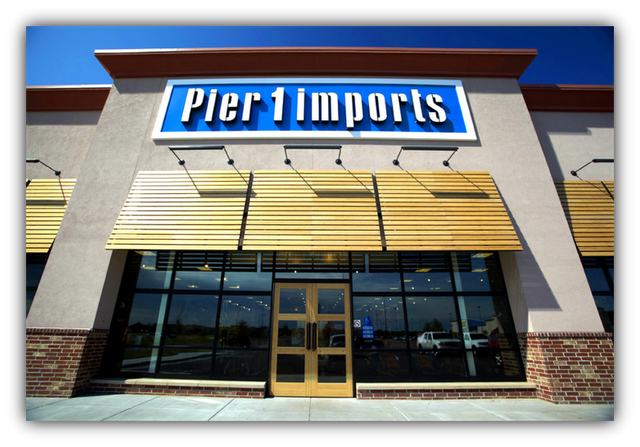
One of Lamboo’s most notable clients is Pier 1 Imports, who has refitted close to 100 of their stores’ entryways with Lamboo bamboo awnings and doors (through partnership with Kolbe). The company plans to update 800 of their 1200 stores with the product.

Benefits of Lamboo Bamboo

Bamboo is a rapidly renewable material, meaning that its harvest cycle is 10 years or less. In fact, Lamboo has hand-picked 6 of the 1600 species of bamboo, which it believes are the best for both high performance and sustainability. These species have harvest cycles of 6-8 years, and is considered to be a low embodied energy material with an excellent life cycle as compared to other materials such as plastics and fiberglass. In comparison to a traditional forest, a bamboo forest produces six times the amount of material per acre per year and sequesters 35% more carbon.

In comparison to traditional wood, bamboo is ten times stronger in tension and over three times stronger in general mechanical properties. However, it has the same thermal properties of wood, meaning that in glass applications, it is more energy efficient than aluminum, vinyl, plastics, steel, and other alternatives.

Additionally, the materials has low VOCs and formaldehyde, making it ideal for indoor air quality.
 
LEED Credit Overview

According to the LEED for New Construction 2009 rating system, Lamboo bamboo can contribute to the following credits:

• Materials and Resources (MR) Credit 6, Rapidly Renewable Materials (1 point):

This credit requires that 2.5% of the total value of building materials are rapidly renewable, which means that they can be harvested in 10 years or less.

• Indoor Environmental Quality (IEQ) Credit 4.4, Low-Emitting Materials - Composite Wood and Agrifiber Products (1 point):

This credit requires that composite wood products, agrifiber products, and laminating adhesives contain no added urea-formaldehyde.

Lamboo could also potentially contribute to the Innovation in Design category as an Environmentally Preferable Material and/or Life Cycle Assessment/Environmental Impact.

(Read more)

(Excerpt of article by Claire Moloney of Green-Buildings.com.


For questions regarding Lamboo, our products, or to schedule an interview please
visit our website at www.lamboo.us or contact us at info@lamboo.us 866-966-2999

"MAKING INNOVATIVE THINKING A STANDARD" - Lamboo Incorporated


Blog by: Dustin Dennison

Tuesday, June 12, 2012

Green Building Materials

Attributes that help determine if a building material is “green” include whether the product is - natural - renewable - non-toxic - made of recycled materials - produced locally - reusable - certified sustainable. A material does not have to have all these attributes to be considered green, but, in general, the more of these attributes it does have the better.

BAMBOO

Bamboo is one of the earth’s fastest-growing plants and can be grown without the use of fertilizers or pesticides. While most trees typically need decades to grow before they can be harvested, bamboo requires only four to six years. Bamboo has also been reported to sequester 35% more carbon than trees, making it attractive in the battle to reduce atmospheric carbon dioxide levels. Because of these qualities, bamboo has become a popular material for use in a variety of green products.

Not all bamboo is the same. Luke Schuette, president of Lamboo®, Inc., notes, “there are nearly 1600 species of bamboo worldwide. Some are soft while others are very dense.” To engineer a laminated bamboo product suitable for structural use in buildings, including horse barns, Lamboo, Inc. uses five species of bamboo that are harder than wood. “The structural capacity of Lamboo,” says Schuette, “is over three times stronger on average than wood.”

In addition to considering the strength of a material used in a horse barn, it is essential that any building material used in your barn is safe for your horse. “It’s really important to be wary of what may be marketed as ‘green’ substitutes for wood products to be sure they aren’t toxic, either in the material itself or the binding agents, and how it does or does not splinter if chewed since horses will nibble on whatever’s within reach,” notes Blackburn. According to Schuette, testing performed by Lamboo concluded it is safe for animal consumption, and horses are less likely to nibble on bamboo compared to wood.

An added benefit of Lamboo is that it burns more slowly than wood due to its increased density, making it less of a fire risk.

 (Read more)

(Excerpt of article by Josh Englander of HolisticHorse.com.

For questions regarding Lamboo or our products please visit our
website at www.lamboo.us or contact us at info@lamboo.us

"MAKING INNOVATIVE THINKING A STANDARD" - Lamboo Incorporated


Blog by: Dustin Dennison

Wednesday, June 6, 2012

Lamboo: Bamboo Made Better?

The idea behind engineered wood products (EWP) is to make wood stronger and more flexible in terms of design applications like long-spans and curved beams. Bamboo is already a highly regarded, sustainable wood species, and now one company is trying to make it better by turning the best kinds of bamboo into an EWP.


Made of thin layers of bamboo held together by adhesives, Lamboo is an engineered, high-performance bamboo product for exterior and interior applications such as beams, trusses, panels, awning systems and more. Choosing from 1,600 different species of bamboo, the company has isolated four with the strongest cellular structures to compose its Lamboo product, which is reported to be ten times stronger in tension, three times stronger mechanically, and twenty percent more stable in moisture and temperature changes compared to its wood counterparts.


And then there are the inherent advantages of bamboo itself, one of the fastest growing plants in the world. It’s an easily renewable resource and a building material that offers some of the highest strength and stability ratings. Bamboo has a warm and soft texture that has won many fans in the remodeling world. So the question is, can Lamboo improve a wood species that’s already excellent in terms of performance and sustainability? I’d like to know.

You can request a quote or order samples from the Lamboo website.

(Read more)

(Excerpt of article by Josh Englander of HGTV Remodels.

For questions regarding Lamboo or our products please visit our
website at www.lamboo.us or contact us at info@lamboo.us

"MAKING INNOVATIVE THINKING A STANDARD" - Lamboo Incorporated


Blog by: Dustin Dennison

Tuesday, June 5, 2012

NanaWall Systems Lamboo Laminated Bamboo

Glass wall technology with laminated bamboo frames

NanaWall Systems, a leader in opening glass wall technology, introduces a folding door system featuring custom-crafted frames of Lamboo laminated bamboo. The Energy Star-Certified NanaWall folding door system incorporates an ecologically responsible wood-alternative material.


Lamboo laminated bamboo was introduced at the American Institute of Architects Convention May 12-14 in New Orleans.

NanaWall Systems has achieved Energy Star ratings and Dade County Hurricane Certification. NanaWall also offers Triple Glazing and OrniluxBird Protection Glass.

“We chose Lamboo because our customers requested more ecologically responsible material to use in LEED certified projects,” says Ebrahim Nana, president of NanaWall Systems. “We already offer FSC wood but Lamboo takes the concept one step further and is recognized as a rapidly renewable resource by the U.S. Green Building Council.”

Lamboo products meet criteria for 2011 "CALGreen" A4.405.4 (Use of building materials from renewable sources) and contribute to LEED (Leadership in Energy and Environmental Design) certification under MR Credit 6 - Rapidly renewable materials, IEQ Credit 4.4 - Low-emitting materials; ID Credit 1 - Innovation in Design (Environmentally Preferable Material), and ID Credit 2 - Innovation in Design (Life Cycle Assessment / Environmental Impact).


Lamboo is available with NanaWall’s WD65 wood-framed system and WA67 aluminum-clad wood-framed system.

Lamboo is an engineered bamboo product that is not only structurally stable but aesthetically pleasing as well. The production process uses 15 percent less embodied energy than that of engineered wood and 300 percent less embodied energy than aluminum and steel. Lamboo on average is 20 percent more stable than wood in moisture and temperature changes, ten times stronger than wood in tension and three times stronger mechanically. Bamboo sequesters 35 percent more carbon than its tree counterparts and also produces 30 percent more oxygen than a like-sized timber forest area.

(Read more) 

(Excerpt of article by WorshipFacilities.com.

NanaWall Lamboo system at 2011 AIA (Video)


For questions regarding Lamboo or our products please visit our
website at www.lamboo.us or contact us at info@lamboo.us

"MAKING INNOVATIVE THINKING A STANDARD" - Lamboo Incorporated


Blog by: Dustin Dennison

Wednesday, May 30, 2012

Are Bamboo Products The Future of Retail?

It's no surprise that the growing popularity and trendiness of “green living” has given rise to an entirely new subset in the global retail industry. With new and recent demands by the public that no longer exclusively includes the extremist eco-conscious microcosm, more sustainable products in retail aimed at the widespread general population are pushing through the niche market into the mainstream.

At the heart of this exponential increase in the green retail marketplace is the material bamboo that encompasses what sustainability represents while being chameleon enough to provide every type of eco-friendly product one could demand. On top of that, Bamboo has the capabilities to produce both quality and aesthetically pleasing products that are able to capture the interest of the mainstream public who are often set in their comfortable buying patterns that can be hazardous for the environment. This combination of sustainability, durability, versatility and beauty makes one wonder that if, while the future of capitalism is sure to be green, is the future of retail rooted in bamboo? All predictions and market trends are pointing towards the affirmative with the industry expected to be worth $25 billion in 2012. What was once overlooked as a predominantly third world material or decorative piece in tropical motifs is about to tidal wave through the global retail industry. Here's why:

Sustainability
Since it can easily adapt easily to changing temperatures, climates, and soil conditions, bamboo can grow everywhere and in almost any condition except Antarctica. It is also naturally anti-bacterial, anti-fungal and anti-pest which makes the need for pesticides null and void. Bamboo produces greater biomass and 30% more oxygen than a hardwood forest of comparable size.

Renewability
Bamboo grows on average 1.6 feet per hour and reaches maturity in about five years making it the fastest growing and most renewable plant on earth. Compare this to Oak, which grows on average 12 inches per year and can take 120 years to mature. To put this in perspective, a sixty-foot tree cut for market takes 60 years to replace and a sixty-foot bamboo cut for market takes 59 days to replace.

Durability
The tensile strength, or the ability to withstand stress, of bamboo surpasses that of steel. Bamboo’s tensile strength is 28,000 per square inch, while steel rates only 23,000 per square inch. That’s why bamboo is used as a building material in areas often wrought with earthquakes.

Versatility
Bamboo is material that can and is used for almost everything. It is popular as a building material such as flooring, furniture and structures in earthquake-ridden areas. Bamboo products are a choice for clothing, textiles and even paper. In fact, there is not a single industry that bamboo doesn’t touch as it can even substitute for charcoal.


Restorative
Bamboo not only produces more oxygen but helps to actually reduce carbon dioxide gases faster than other plants, which can help reverse the effects of global warming. Since it is highly adaptable to most climates and soil conditions it can help restore degraded and damaged lands. It also acts as a natural water control barrier, which helps reduce rain run off and soil erosion.

Aesthetically Pleasing
Simply put, bamboo is pretty. Its universally appealing aesthetic makes it popular for both those that lean towards trendy designs and those that favor a more classic look. Bamboo products have a smooth sleek texture that is pleasing to touch and symmetrical design pattern that people like to look at. It produces soft clothing, savory food, unique looking buildings and even good-looking gadgets.

Bamboo products are the new kings of the green and environmentally friendly retail market. With its flawless reputation and ability to “do it all” the trend towards bamboo becoming the future of all retail seems imminent.

(Read more)

(Excerpt of article by Greg Voakes of Business Insider.


For questions regarding Lamboo or our products please visit our
website at www.lamboo.us or contact us at info@lamboo.us

"MAKING INNOVATIVE THINKING A STANDARD" - Lamboo Incorporated
Blog by: Dustin Dennison

Tuesday, May 22, 2012

Growing the Future of Bamboo Products

Bamboo has nothing but a positive reputation when it comes to the environment. It grows quickly, it doesn't need pesticides or much water, it pulls carbon dioxide out of the air, and it can be used in a nearly unimaginable range of products. With its well deserved, eco-friendly reputation, companies have been quick to integrate bamboo into product lines and new bamboo-based businesses continue to pop up.

There are now bamboo shirts, skirts, socks, underwear, furniture, floors, paper, plates, sheets, towels, plates, bowls, spoons, kitchen utensils, keyboards, cleaning wipes...practically enough items to outfit an entire house made with bamboo everything.

But with great demand comes the need for great supply. As more and more companies look to source products using bamboo, unsustainable harvesting methods may end up killing a resource that has so much potential.

One downside of bamboo's popularity is that it's at risk from over harvesting: The United Nations warns that about half of the 1,200 varieties of bamboo in the world are extinct or in danger of being eradicated.

Enter BooShoot Gardens, a plant tissue culture laboratory out of Mount Vernon, Wash., that is growing large amounts of specific types of bamboo to replenish and increase the world's bamboo supply and meet the demand from companies like Method and Totally Bamboo.

Founded in 1998 by Jackie Heinricher, BooShoot produced 2,000 bamboo plants in 2004, the first year it released plants. This year it plans to produce more than 2 million, and has the capacity to produce 12 million.

The company sells its bamboo through wholesale growers and retailers in more than 20 states and Canada. It's been selling bamboo to a biofuel company in the southeast U.S., projects in South Africa and throughout Southeast Asia.


What's Driving the Bamboo Market

Bamboo has such a green reputation because it grows fast (earning it the moniker of a "rapidly renewable" resource as opposed to a plain old "renewable" resource, a title given to everything from trees to corn to chicken feathers), doesn't require pesticides, uses little water, and pulls carbon dioxide out of the air faster and better than other plants.

Bamboo plants sequester four times as much carbon dioxide as hardwood trees (taking in 62 tons of CO2 per 2.4 acres versus 16 tons per 2.4 acres of trees) and puts out 35 percent more oxygen.

While bamboo has been recognized for quite a while as a green material, its use has shot up in the last few years along with many other green materials. Bamboo goods are proliferating at major mainstream retailers like Wal-Mart and Target, and being used in clothing both from eco-centric companies and more mainstream ones like JCPenney and Banana Republic.

The bamboo goods industry is expected to be worth $25 billion around 2012, Heinricher said, and some companies that make or are looking into making bamboo goods are encountering a supply bottleneck.

While this demand is boosting BooShoot's business, it's having a handful of negative effects on the global bamboo supply. As demand has increased and supply tightened, the final products have been affected. Bamboo flooring, for example, is generally much thinner these days than years ago, Heinricher said.

And then there's the rate of harvesting: Bamboo can be harvested every 5-10 years, much faster than trees used for other forest-based products. But harvesting is starting to outpace bamboo growth and its ability to recover. Cutting down too much bamboo in one area can damage an even-wider stretch of the plant.

"If more than 30 percent (of an acre) is taken at any one time, it begins to affect the viability of the root system and begins to compromise bamboo's ability to replenish itself," Heinricher said.

If an area of bamboo is damaged to the point that it needs to be replanted starting from seeds (or even if farmers want to start new bamboo groves from seeds), they are limited in how many seeds they can get their hands on since it can take 60-100 years for the plants to flower.

What BooShoot Gardens is doing is cutting out that long flowering period by cloning plants - not genetically modifying them - and multiplying them, letting farmers plant them like any other crop.

(Read full article)

(Excerpt of article by Jonathan Bardelline of GreenBiz.


For questions regarding Lamboo or our products please visit our
website at www.lamboo.us or contact us at info@lamboo.us

"MAKING INNOVATIVE THINKING A STANDARD" - Lamboo Incorporated

Blog by: Dustin Dennison

Monday, May 21, 2012

Project Innovation award winners announced

The Greater Springfield Chamber of Commerce is pleased to announce Lamboo, Inc. as the 2012 recipient of the Project Innovation Award. The award was presented on Thursday, May 17, 2012 in the Studio Theater at University of Illinois Springfield. The annual competition provides seed funds for entrepreneurs to start or expand businesses.


(From left to right: Luke Schuette, Founder/CEO; Debby Richardson,
Director of Marketing; Jeran Hammann, V.P. Operations)

Project Innovation is a prestigious entrepreneurial competition where individuals and businesses have their unique ideas recognized and rewarded through this innovative contest.

(Lamboo door system integrated into Pier 1 Imports retail location)

Lamboo, Inc. is a technology company that specializes in the manufacturing of engineered bamboo for structural, architectural, and industrial applications worldwide. As a leader in the sustainable design technology industry, Lamboo, Inc. is an environmentally responsible company that loves giving back to the community. Lamboo has global headquarter offices located in Springfield, Illinois as well as Geneva, Switzerland and is expanding it’s operations nationwide. Within Illinois Lamboo has fabrication and distribution hubs in Peoria, Galesburg, and Litchfield and maintains partnerships throughout the US and Europe.

Radio Interview:
http://wtax.com/play_window.php?audioType=Episode&audioId=5851527
News source:
http://www.sj-r.com/breaking/x2138761392/Project-Innovation-award-winners-announced


Please contact Debby Richardson for any questions regarding this
award or to schedule an interview. debby@lamboo.us

Wednesday, May 16, 2012

Lamboo® Elite™ Series

Lamboo, Inc. is pleased to announce that they will be showcasing the Lamboo® Elite™ Series of Products specific to the Aviation Industry within one of the most prestigious shows in the world for the elite business Jet industry, The Farnborough International Airshow July 9th-15th. Lamboo is currently collaborating and supplying premium products into the custom interior jet industry and will be available to discuss supply agreements with current and new players in the market.


Products:
Premium Engineered Bamboo Veneer – For Jet Interiors
Premium Engineered Bamboo Components – For Jet Interiors
Premium Engineered Bamboo Panels – For Jet Interiors


*All of our Elite™ products meet the most stringent of Aviation Standards and Certifications Required for the industry.

Lamboo, Inc. and their premium products will be located at booth #H2/B17 and will be represented by Peter Illig, the Managing Director of Lamboo International, based in Switzerland, and our Director of R&D Luke D. Schuette, from the Lamboo, Inc. USA office.

Please contact Debby Richardson for any questions regarding this
show or Lamboo® Elite™ for Jet Interiors. debby@lamboo.us