

Showing posts with label architecture. Show all posts
Showing posts with label architecture. Show all posts
Monday, December 8, 2014
New documentary on architect, Vo Trong Nghia, and his use of bamboo in his masterpieces
A wonderful new documentary on the famous Vietnamese architect, Vo Trong
Nghia, was recently published and entitled “Rebel Architecture-Greening
the City”. Mr. Nghia is pioneering a distinctive place for bamboo in
worldwide architecture and has created mesmerizing structures time and
again. Like Lamboo, he believes bamboo offers distinctive acoustics,
structural advantages, and durability that will ultimately shape the
future of sustainable architecture. See the video below!

Thursday, November 20, 2014
Lamboo Materials Showcased at ASLA Annual Expo 2014 in Denver, Colorado
Anova will be showcasing the Lamboo® Elements™ materials at the 2014 ASLA Annual Expo this weekend, November 21-24th in Denver, Colorado. ASLA is the largest gathering of landscape architecture professionals in the world with over 500 exhibitors. Anova
will be showcasing their new sustainable and aesthetic bamboo
collection in booth #1215. Stop by and view these beautiful displays!

For more information about Lamboo Technologies and materials, please contact Lamboo at 866-966-2999 or email: info@lamboo.us.
For more information about Lamboo Technologies and materials, please contact Lamboo at 866-966-2999 or email: info@lamboo.us.
Tuesday, August 5, 2014
Lamboo Partners with Leading Site Furnishing Company, Anova

Lamboo, Inc. is pleased to announce a new exclusive partnership with Anova® located in St. Louis, MO. Anova is a leading manufacturer of innovative, high-quality site furnishings at an exceptional value. With this exclusive partnership, Anova has integrated Lamboo Technologies into its arsenal of material solutions in commercial outdoor furnishings. Lamboo leads the materials revolution in providing one of the most sustainable materials on the planet, laminated veneer bamboo (LVB). With superior structural and mechanical properties over other natural and engineered building materials, Anova is leading the industry by bringing Lamboo’s technology into current product offerings and developing a pipeline of exciting new product lines, setting Anova apart from other site furnishing companies.
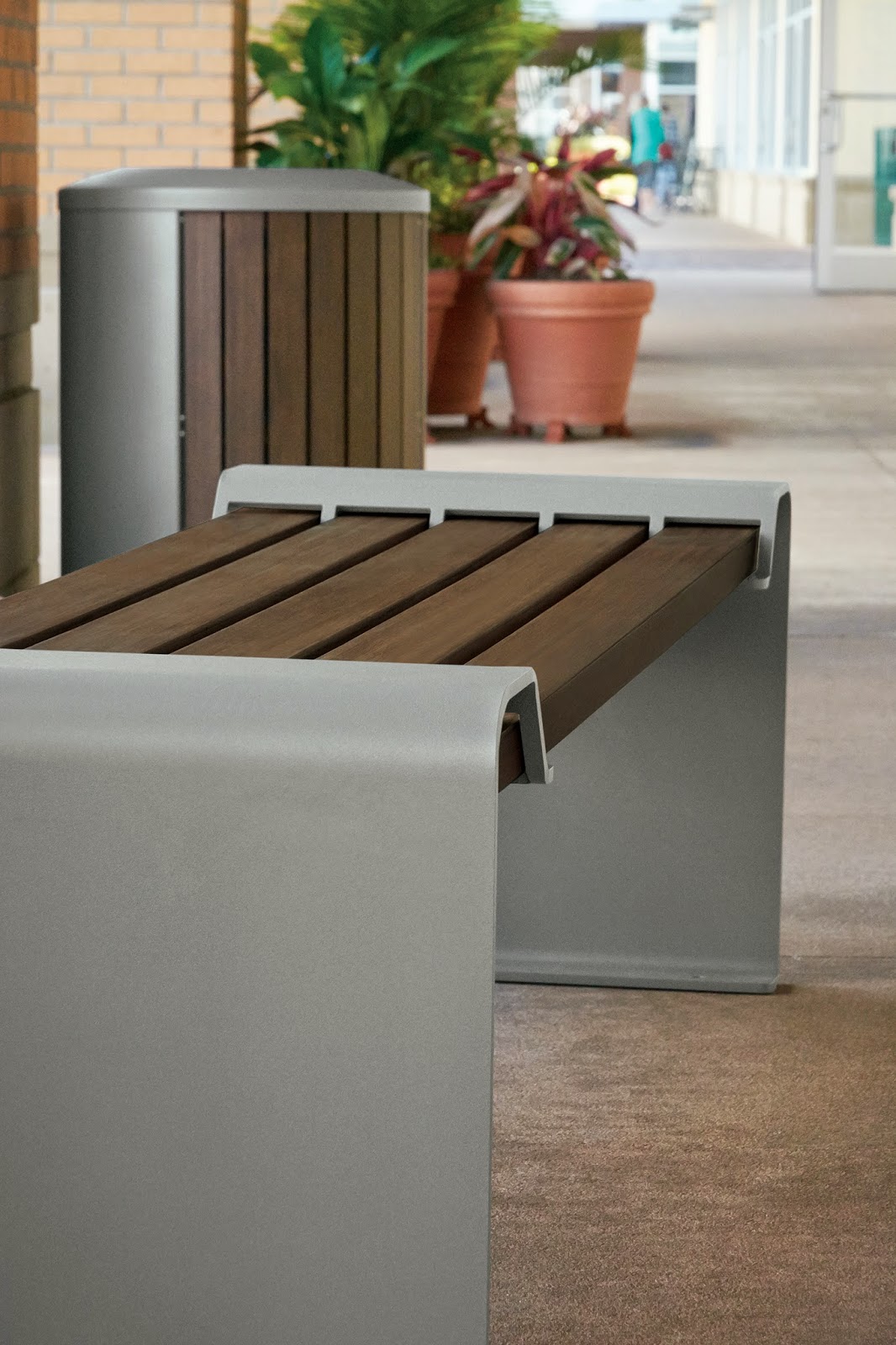
“Anova is definitely a company that shares the same vision when it comes to innovation and sustainable design” says Lamboo Vice President of Operations, Jeran Hammann. “We here at Lamboo are very fortunate to have paralleled with such a strong company whose focus on performance, design, innovation, and sustainability aligns with Lamboo’s core values to market supply. This partnership between our companies will help advancements in site furnishing development and future solutions to customers focused on performance and sustainable products.” Jared Stinehagen, Director of Sales at Anova stated “At Anova, we’re continually looking at how our materials align with our core values of beauty and comfort. We’ve traditionally stayed away from natural hardwoods because of the harvesting and sustainability concerns. With Lamboo we found a partner that affords us a far superior material in both sustainability and durability that we’re eager to bring to the market.” Katherine Wilson, the Director of Marketing at Anova added “We’re excited to see just how far reaching this partnership will be in terms of new product development and site planning.” Both Lamboo and Anova are utilizing patented technologies, new tools and networks to develop captivating, quality products that satisfy customers’ need for sustainable designs.

Lamboo, Inc. is an American material technology and manufacturing company founded with the combined experience of seasoned architects, structural engineers, material scientists, and biotechnology specialists. Our purpose is the development of sustainable design technology for high-performance OEM applications as well as architectural, structural, and design industries worldwide. For more information about Lamboo products, go to www.lamboo.us Anova is the proud manufacturer of high-quality site furniture at an exceptional value. For more than 40 years, Anova has been an innovator of site furnishings. Anova creates first and lasting impressions in public spaces, enhancing the beauty and comfort of any environment. For more information, go to www.anovafurnishings.com
Tuesday, July 9, 2013
Vital tool to support timber use in construction

Aiming to position timber as a first-choice ‘primary and preferred construction material’, Wood First Plus will provide evidence of the credentials of timber from cradle to grave.
Work has begun to create a free online information hub containing all of the environmental and design data necessary for project managers, designers and architects to specify timber as a first choice material.
The hub will be called Wood First Plus, and has been organized by Wood for Good, the UK timber industry promotion and sustainability group, supported by Scottish Enterprise, the Timber Trade Federation, Forestry Commission Scotland and the Timber Research and Development Association.
Building on the arguments of the Wood First campaign, which aims to position timber as a first-choice ‘primary and preferred construction material’, Wood First Plus will provide evidence of the credentials of timber from cradle to grave.
The project is a result of on-going consultation with timber industry organizations and external stakeholders, including contractors groups, architects, professional institutions and many others.
All stakeholders will be able to access whole-life information on timber products free of charge through a dedicated website, managed by Wood for Good.
Individual timber companies will be able to use this data as a basis to develop specific environmental product declarations (EPD) for their products to guarantee their sustainability and traceability.
David Hopkins, Wood for Good’s head of external communications, said: “With the built environment sector now firmly focused on delivering low-carbon, sustainable buildings, being able to quantify the environmental impact of construction materials is becoming increasingly important.
“The aim for Wood First Plus is to provide empirical evidence on the performance of specific wood products, making it easier for construction professionals wishing to build with timber to do so, and helping them to adhere to industry regulations. We look forward to announcing the first set of results later this year.”
The use of wood in construction brings numerous benefits for the environment, the economy, and the community. Trees absorb CO2 and store it, and when used in construction form an important store of atmospheric carbon, helping to limit global warming.
With sustainably managed forests and increased use of timber in construction it is an endlessly renewable process.
Additionally, wood has good thermal performance properties, increasing the energy efficiency and operational performance of a building. Timber framed buildings are often quicker to erect saving on construction cost.
The organization is also calling for a 'Wood First' stipulation in planning guidance that would require wood to be considered, where feasible, as the primary construction material in all publicly-funded new build and refurbishment projects, from housing to bridges to schools.
PE International has been engaged to oversee the collection, analysis and review of all life cycle assessment (LCA) data for a wide range of timber and timber products that will be used in the online tool.
The company has extensive experience in the construction materials sector and in working with the timber industry, having previously completed a major LCA project on US hardwood lumber for the American Hardwood Export Council.
(Excerpt of article from Link2. NOT AFFILIATED WITH LAMBOO)
As more and more organizations return to the basics and look for sustainable options in their projects, the demand for renewable resources such as wood will grow exponentially. Often overlooked by mainstream architecture, is an ancient building material that can meet these demands, bamboo. As a rapidly renewable, high performance, material bamboo can be integrated with other bio based (or renewable) materials to provide truly sustainable buildings and products. Bamboo has a wealth of environmental and performance attributes that make it ideal for the construction and retail markets.
Other articles of interest:
Tuesday, April 9, 2013
Sustainability in Construction of the Future
Facing the numerous challenges related to sustainability, many research works and experiments are conducted to develop innovative concepts, technologies and construction systems.
In order to identify the key perspectives of this domain, the magazine Habitation publishes an article on the construction of the future, including an interview of Professor Emmanuel Rey of the Laboratory of Architecture and Sustainable Technologies (LAST).

Among the numerous innovations currently under development in the built environment, some tendencies can be emphasized and grouped according to four research axes, which meet the work in which the LAST is presently involved.
(Excerpt of article from Azobuild. NOT AFFILIATED WITH LAMBOO)

Lamboo, Laminated Veneer Bamboo (LVB), is a superior performing sustainable alternative that many will look towards to meet the Sustainable Technology needs of the future. Lamboo is leading the international effort of the industrialization of bamboo materials in both the public and private sectors. Bamboo is unmatched in its strength and longevity as a building material and is one of the fastest growing plant species on the planet. Lamboo is working with a number of distinguished organizations and universities to gain certifications and recognition for the potential role bamboo has in our future. To learn more about these efforts please view our Research and Product Information pages. Stay connected for updates on the growth of bamboo construction as exciting studies are being carried out through the organizations such as the USGBC, and Universities worldwide like the University of Cambridge and Oregon. Updates will be posted in the coming weeks!

In order to identify the key perspectives of this domain, the magazine Habitation publishes an article on the construction of the future, including an interview of Professor Emmanuel Rey of the Laboratory of Architecture and Sustainable Technologies (LAST).
Among the numerous innovations currently under development in the built environment, some tendencies can be emphasized and grouped according to four research axes, which meet the work in which the LAST is presently involved.
Symbiotic neighborhoods.
This third generation of sustainable neighborhoods will borrow principles from industrial ecology to further develop synergies and resource exchanges at the scale of a neighborhood.Rebuild with flexibility.
Much more than imagining a new ideal city in the middle of the fields, it is necessary, especially in Europe, to determine the optimal way to upgrade existing towns and cities. A key issue will therefore be the renovation, transformation and replacement of existing buildings.New energy paradigms.
The first efficiency measure always consists in decreasing the needs. This reality is going to make bio-climatic strategies essential, taking into account an increasing number of parameters: passive solar energy and natural light, natural ventilation and passive cooling, weighing the interests of urban densification and quality of life. Integrated design of renewable energy system will also play an increasing role in the next decades.Recyclable housing.
These enhancements will help the growing, in energy balances, of the importance of grey energy. This will promote, in Switzerland, the use of local resources such as wood, but also to innovate in the field of hybrid construction systems, which combine several materials taking advantage of the characteristics of each. Another major axis is the recovery of construction materials. "Today's buildings are mines for those of tomorrow. We begin to think about improved dissociated building systems which can reduce construction wastes and anticipate their treatment at the time of deconstruction" explains Prof. Emmanuel Rey. (Read More)(Excerpt of article from Azobuild. NOT AFFILIATED WITH LAMBOO)
Lamboo, Laminated Veneer Bamboo (LVB), is a superior performing sustainable alternative that many will look towards to meet the Sustainable Technology needs of the future. Lamboo is leading the international effort of the industrialization of bamboo materials in both the public and private sectors. Bamboo is unmatched in its strength and longevity as a building material and is one of the fastest growing plant species on the planet. Lamboo is working with a number of distinguished organizations and universities to gain certifications and recognition for the potential role bamboo has in our future. To learn more about these efforts please view our Research and Product Information pages. Stay connected for updates on the growth of bamboo construction as exciting studies are being carried out through the organizations such as the USGBC, and Universities worldwide like the University of Cambridge and Oregon. Updates will be posted in the coming weeks!
For questions regarding Lamboo or our products please visit our website
at www.lamboo.us or contact us at info@lamboo.us 866-966-2999
…
“MAKING INNOVATIVE THINKING A STANDARD” – Lamboo Incorporated


at www.lamboo.us or contact us at info@lamboo.us 866-966-2999
…
“MAKING INNOVATIVE THINKING A STANDARD” – Lamboo Incorporated

Blog by: Dustin Dennison
Tuesday, March 12, 2013
WORLDBEX - The Philippine World Building and Construction Exposition

For more than a decade, WORLDBEX or The Philippine World Building and Construction Exposition has been a haven for the local and international building and construction industry, supported by acknowledged sectors of society and a visitor profile of more than 150,000 per year, it is dubbed to be Asia’s most attended construction exposition.
WORLDBEX holds a good number of global ties with countries such as Austria, Australia, Belgium, Brunei, China, Finland, Hong Kong, the U.S. and Germany to name a few of the 25 participating countries, it is an ideal venue for business transactions and introduction of innovations.
WORLDBEX is known for putting together over 500 exhibiting companies and more than a thousand booths in a Wi-Fi ready exhibit area of 30,000 sq/m. These companies range from building materials equipment services, construction design and development, architects and interior designers, and leading manufacturers and furniture exporters. WORLDBEX will also showcase the top colleges and universities in inter-school interior design competition and include the biggest names in the local and international building and construction scene for seminars.
At the show Lamboo will be showcasing the world's most renewable and sustainable construction material, Laminated Veneer Bamboo (LVB), a high performance bamboo product. Representatives will be at booth #S55-S56 to answer any questions attendees may have and to discuss the attributes that make Lamboo a superior product for the construction industry.
To learn more please visit our Sustainability, Research, or Certifications pages. Please visit our Resource Library for product details and specifications!
To remain updated on the latest with Lamboo and the sustainable construction industry please subscribe to this blog via the link at the top right hand corner of this page!

For questions regarding Lamboo or our products please visit our website
at www.lamboo.us or contact us at info@lamboo.us 866-966-2999
…
“MAKING INNOVATIVE THINKING A STANDARD” – Lamboo Incorporated
Thursday, January 10, 2013
BAU 2013

BAU the world's leading building annual trade fair will be held in Munich Germany January 14 – 19, 2013. BAU showcases the latest trends in architecture, materials and systems for industrial, commercial and residential construction and for interior design. Exhibits are divided according to building material, product and theme areas – key themes for the future such as sustainable building play an important role in all sections of the exhibition.
BAU targets all those involved in planning, designing and building: engineers, architects and project developers and also the building trades, building materials retailers, building firms and representatives of the housing industry.
Lamboo partners Raico and Solarlux will be in attendance showcasing their latest innovative designs and products. As industry leaders in the window, door, and curtain wall markets they have chosen to implement Lamboo's laminated veneer bamboo (LVB) due to its superior performance and longevity.
Exhibitor Information

RAICO GmbH | Booth: B1.308
Tel:
 +49 8265 9110
Email: info@raico.de
Web: www.raico.de
Products

SOLARLUX GmbH | Booth: C1.329
Tel:
+49 5402 4000 Email: info@solarlux.de
Web: www.solarlux.com
Products
For questions regarding Lamboo or our products please visit our website
at www.lamboo.us or contact us at info@lamboo.us866-966-2999
…
“MAKING INNOVATIVE THINKING A STANDARD” – Lamboo Incorporated
at www.lamboo.us or contact us at info@lamboo.us
866-966-2999 …
“MAKING INNOVATIVE THINKING A STANDARD” – Lamboo Incorporated
Wednesday, December 19, 2012
The Evolution of Green Construction
The homes we live in create a huge carbon debt before the proud new owners ever cross the threshold. But even worse is the fact that they are built in such a way that they will continue to do harm once they are inhabited, thanks to inadequate insulation that leaves homeowners cranking the heat and AC, not to mention a complete lack of sustainable energy options. Luckily, there is a bright spot on the horizon, and it comes in the form of green construction.
The average construction site could be described as less than eco-friendly, to put it mildly. The materials used for such projects often include natural resources like wood and stone that are not harvested in a sustainable manner. Both logging and mining operations are notorious for damaging the environment through their efforts and doing very little to clean up afterwards. Further, these materials are frequently shipped all over the globe, creating massive amounts of pollution along every step of the way, not to mention the manufacturing processes, which produce even more pollution and waste.
And then, of course, there is the construction itself, which continues this assault on the environment. In short, the homes we live in create a huge carbon debt before the proud new owners ever cross the threshold. But even worse is the fact that they are built in such a way that they will continue to do harm once they are inhabited, thanks to inadequate insulation that leaves homeowners cranking the heat and AC, not to mention a complete lack of sustainable energy options. Luckily, there is a bright spot on the horizon, and it comes in the form of green construction.
Over the last several years, a rapidly growing awareness of serious environmental issues (pollution, deforestation, global warming, habitat loss, species extinction, etc.) has led the public to call for alternatives to the products and services they use on a daily basis. And since many consumers start in the home, the demand for green options on this front has grown considerably. In response, the construction industry has begun to realize a shift in practices, not as a whole, but at least in part, with companies springing up that provide eco-friendly options in the building process.
(Read More)
(Excerpt of article by EcoCltr.)

Environmental concerns have initiated efforts by organizations of all kinds from the private or public sector as well as government bodies to develop renewable practices and materials to replace declining or unsustainable resources. Bamboo as a resource is unmatched in its potential as an environmentally friendly, structurally stable building material. Bamboo produces 30% more oxygen and sequesters 35% more carbon than a like sized timber forest area. With a growth rate of 6-8 years to maturity (compared to timber 25-50) and root structure that eliminates the need for replanting bamboo can be produced on a large scale with much more ease than timber forests cutting costs and limiting energy consumption. Lamboo’s LVB (Laminated Veneer Bamboo) also represents one of the highest performing building materials available to the industry. Learn more about Lamboo’s attributes here.
The average construction site could be described as less than eco-friendly, to put it mildly. The materials used for such projects often include natural resources like wood and stone that are not harvested in a sustainable manner. Both logging and mining operations are notorious for damaging the environment through their efforts and doing very little to clean up afterwards. Further, these materials are frequently shipped all over the globe, creating massive amounts of pollution along every step of the way, not to mention the manufacturing processes, which produce even more pollution and waste.
And then, of course, there is the construction itself, which continues this assault on the environment. In short, the homes we live in create a huge carbon debt before the proud new owners ever cross the threshold. But even worse is the fact that they are built in such a way that they will continue to do harm once they are inhabited, thanks to inadequate insulation that leaves homeowners cranking the heat and AC, not to mention a complete lack of sustainable energy options. Luckily, there is a bright spot on the horizon, and it comes in the form of green construction.
Over the last several years, a rapidly growing awareness of serious environmental issues (pollution, deforestation, global warming, habitat loss, species extinction, etc.) has led the public to call for alternatives to the products and services they use on a daily basis. And since many consumers start in the home, the demand for green options on this front has grown considerably. In response, the construction industry has begun to realize a shift in practices, not as a whole, but at least in part, with companies springing up that provide eco-friendly options in the building process.
(Read More)
(Excerpt of article by EcoCltr.)
Environmental concerns have initiated efforts by organizations of all kinds from the private or public sector as well as government bodies to develop renewable practices and materials to replace declining or unsustainable resources. Bamboo as a resource is unmatched in its potential as an environmentally friendly, structurally stable building material. Bamboo produces 30% more oxygen and sequesters 35% more carbon than a like sized timber forest area. With a growth rate of 6-8 years to maturity (compared to timber 25-50) and root structure that eliminates the need for replanting bamboo can be produced on a large scale with much more ease than timber forests cutting costs and limiting energy consumption. Lamboo’s LVB (Laminated Veneer Bamboo) also represents one of the highest performing building materials available to the industry. Learn more about Lamboo’s attributes here.
For questions regarding Lamboo or our products please visit our website
at www.lamboo.us or contact us at info@lamboo.us 866-966-2999
…
“MAKING INNOVATIVE THINKING A STANDARD” – Lamboo Incorporated
at www.lamboo.us or contact us at info@lamboo.us 866-966-2999
…
“MAKING INNOVATIVE THINKING A STANDARD” – Lamboo Incorporated
Blog by: Dustin Dennison
Wednesday, November 28, 2012
AEC Daily Continuing Education – Lamboo

AEC Daily is a developer of online education courses for the construction and architecture industries. It is an e-learning provider for architects, engineers, and other construction professionals and serves over 450 companies.
Founded in 2001, online education courses are the main field of AEC Daily. They provide over 300 courses with a focus on sustainable design. Most courses are free while there is a submission fee for courses like the virtual tour of the USGBC headquarters. AEC Daily won the highest award in education from the American Institute of Architects in 2009 and continue to attract the highest numbers of design professionals in the industry. AEC Daily has been recognized as the common denominator for education in the AEC industry.
Lamboo offers a course covering laminated veneer bamboo (LVB) use in structural and curtain wall applications. This course compares the structural and mechanical properties of common building materials and composites, and illustrates how LVB components can be fully integrated into structural or curtain wall designs and meet the requirements of today’s sustainable built environment. Additional courses for window & door and interior panels will be added in coming months.

Thursday, November 8, 2012
Sustainable Materials for Curtain Wall Innovations
Lamboo Inc. has integrated the most sustainable natural resource, bamboo, into curtain wall members and storefront system components.

Lamboo’s Renewall™ series is ideal for both residential and commercial applications bringing warmth and longevity to each project while exceeding aluminum system’s performance through longer unsupported spans, higher fire rating, and thermal performance. Renewall™ systems can easily be integrated into innovative projects large and small while meeting Passive House Standards.
The Split Mullion Design allows for easy integration of Lamboo materials with aluminum coverings for many applications from storefronts, curtain walls, and conservatories. The coupling mullion pre-fabricated frames can be finished in the fabrication shop with base profiles, interior gaskets and glass supports. Installation on site, these frames are simply coupled, glazed, and finished with pressure profiles. Incorporating Lamboo® Renewall™ materials give systems unmatched qualities including aesthetics, thermal properties, and ease of integration while obtaining optimum variability within harsh and changing environments.

For questions regarding Lamboo, our products, or to schedule an interview please
visit our website at www.lamboo.us or contact us at info@lamboo.us 866-966-2999
…
“MAKING INNOVATIVE THINKING A STANDARD” – Lamboo Incorporated
“MAKING INNOVATIVE THINKING A STANDARD” – Lamboo Incorporated
Blog by: Dustin Dennison
Wednesday, November 7, 2012
A focus on sustainable building
In a still-recovering economy, here are several high-level best practices to guide green building projects.
Today’s smart architects and contractors know that whenever possible buildings should be designed and built green, but not everyone knows what determines a "green" space. How do you sustain a focus on sustainable building in a still-weakened economy? Here are the necessary steps and best practices for maintaining the momentum and keeping the sustainable building movement growing strong.
Best Practices for Sustainable Building
1. Think of the Whole Project. Sustainability is about end-use, how a building functions for occupants within the community. Experts need to be involved from day one to work with architects and builders to develop the project as a team. Business needs must be determined to ensure they are effectively and clearly communicated to the team. Determining these needs ahead of time ensures all team members are able to assess different sites, communities, lots, and existing buildings when looking for the best fit.
2. User-Based Planning. Construction utilities and internet connectivity must be added in the beginning to schematics, but technology and building needs should also be considered. Technology can shape the way a building is used and how people work and live in it. By focusing on the building’s future use, the planners can help identify early cost-savings, better floor plans and tighter specifications.
3. Environmental Specifications. It is important to look at the complete picture of a building or new site when determining where to spend money for environmental and energy efficiency investments. In many buildings, especially single story brick buildings, the largest source of energy loss is through the walls as this is the largest surface area exposed to the exterior. Solar panels have a lot of sex appeal and show a commitment to “going green,” but cost to benefit ratio is not as high as some of the less visible upgrades. Spray foaming block walls to a depth of 2.5 inches can increase the R value (measurement of thermal resistance) by 500 percent, and this depth of foam also qualifies as a vapor barrier which prevents mold and condensation.
If the goal early on is to lower expenses associated with running the building, the architect and AV design partner (both should be involved early) can work together to design a space that utilizes and incorporates the natural resources of the site such as lots of sun, tree cover and orientation. For example, Spye Group’s newly remodeled building has dropped the lighting bill more than 50 percent due to installing many large windows and a lighting system that combines natural light with artificial light to obtain an optimal level in each office.
4. Integrated Design. An emerging trend in sustainable building is integrating interior aesthetics, high performance technologies and environmentally-focused specifications to create a space built and tailored to exactly fit a user's needs.
Sustainability can also be measured as the optimal benefit of a space, not just a reduction in expenses as compared to the same square footage of another building. By incorporating technology and smart design into a building, a company may obtain more from employees, be more efficient, create more products and sell at a higher margin.
In addition, if a building is designed to grow with a company (designing it for the future) there will be unmeasureable savings when upgrading technology, operating the business there for many more years than someone who cut corners at the beginning and has to move or do a major remodel.
(Read More)
(Excerpt of article by the Paul Krumrich, Founder and President, SpyeGlass. NOT AFFILIATED WITH LAMBOO)

In this new era of sustainable construction the industry will have to embrace new practices and materials to replace traditional forms that are no longer feasible. Bamboo is a example of one of these new ultra renewable resources that will be used to meet the demand for our growing society.
Bamboo as a resource is unmatched in its potential as a environmentally friendly, structurally stable and renewable building material. Bamboo produces 30% more oxygen and sequesters 35% more carbon than a like sized timber forest area. With a growth rate of 6-8 years to maturity (compared to timber 25-50) and root structure that eliminates the need for replanting bamboo can be produced on a large scale with much more ease than timber forests cutting costs and limiting energy consumption. Learn more about the amazing attributes of bamboo here.
Additionally incorporating Lamboo (LVB) laminated veneer bamboo into projects can earn LEED (Leadership in Energy and Environmental Design) certification under MR Credit 6 - Rapidly renewable materials, IEQ Credit 4.4 - Low-emitting materials; ID Credit 1 - Innovation in Design (Environmentally Preferable Material), and ID Credit 2 - Innovation in Design (Life Cycle Assessment / Environmental Impact).
*Please refer to USGBC for information regarding project requirements
Today’s smart architects and contractors know that whenever possible buildings should be designed and built green, but not everyone knows what determines a "green" space. How do you sustain a focus on sustainable building in a still-weakened economy? Here are the necessary steps and best practices for maintaining the momentum and keeping the sustainable building movement growing strong.
Best Practices for Sustainable Building
1. Think of the Whole Project. Sustainability is about end-use, how a building functions for occupants within the community. Experts need to be involved from day one to work with architects and builders to develop the project as a team. Business needs must be determined to ensure they are effectively and clearly communicated to the team. Determining these needs ahead of time ensures all team members are able to assess different sites, communities, lots, and existing buildings when looking for the best fit.
2. User-Based Planning. Construction utilities and internet connectivity must be added in the beginning to schematics, but technology and building needs should also be considered. Technology can shape the way a building is used and how people work and live in it. By focusing on the building’s future use, the planners can help identify early cost-savings, better floor plans and tighter specifications.
3. Environmental Specifications. It is important to look at the complete picture of a building or new site when determining where to spend money for environmental and energy efficiency investments. In many buildings, especially single story brick buildings, the largest source of energy loss is through the walls as this is the largest surface area exposed to the exterior. Solar panels have a lot of sex appeal and show a commitment to “going green,” but cost to benefit ratio is not as high as some of the less visible upgrades. Spray foaming block walls to a depth of 2.5 inches can increase the R value (measurement of thermal resistance) by 500 percent, and this depth of foam also qualifies as a vapor barrier which prevents mold and condensation.
If the goal early on is to lower expenses associated with running the building, the architect and AV design partner (both should be involved early) can work together to design a space that utilizes and incorporates the natural resources of the site such as lots of sun, tree cover and orientation. For example, Spye Group’s newly remodeled building has dropped the lighting bill more than 50 percent due to installing many large windows and a lighting system that combines natural light with artificial light to obtain an optimal level in each office.
4. Integrated Design. An emerging trend in sustainable building is integrating interior aesthetics, high performance technologies and environmentally-focused specifications to create a space built and tailored to exactly fit a user's needs.
Sustainability can also be measured as the optimal benefit of a space, not just a reduction in expenses as compared to the same square footage of another building. By incorporating technology and smart design into a building, a company may obtain more from employees, be more efficient, create more products and sell at a higher margin.
In addition, if a building is designed to grow with a company (designing it for the future) there will be unmeasureable savings when upgrading technology, operating the business there for many more years than someone who cut corners at the beginning and has to move or do a major remodel.
(Read More)
(Excerpt of article by the Paul Krumrich, Founder and President, SpyeGlass. NOT AFFILIATED WITH LAMBOO)
In this new era of sustainable construction the industry will have to embrace new practices and materials to replace traditional forms that are no longer feasible. Bamboo is a example of one of these new ultra renewable resources that will be used to meet the demand for our growing society.
Bamboo as a resource is unmatched in its potential as a environmentally friendly, structurally stable and renewable building material. Bamboo produces 30% more oxygen and sequesters 35% more carbon than a like sized timber forest area. With a growth rate of 6-8 years to maturity (compared to timber 25-50) and root structure that eliminates the need for replanting bamboo can be produced on a large scale with much more ease than timber forests cutting costs and limiting energy consumption. Learn more about the amazing attributes of bamboo here.
Additionally incorporating Lamboo (LVB) laminated veneer bamboo into projects can earn LEED (Leadership in Energy and Environmental Design) certification under MR Credit 6 - Rapidly renewable materials, IEQ Credit 4.4 - Low-emitting materials; ID Credit 1 - Innovation in Design (Environmentally Preferable Material), and ID Credit 2 - Innovation in Design (Life Cycle Assessment / Environmental Impact).
*Please refer to USGBC for information regarding project requirements
For questions regarding Lamboo, our products, or to schedule an interview please
visit our website at www.lamboo.us or contact us at info@lamboo.us 866-966-2999
…
“MAKING INNOVATIVE THINKING A STANDARD” – Lamboo Incorporated
“MAKING INNOVATIVE THINKING A STANDARD” – Lamboo Incorporated
Blog by: Dustin Dennison
Thursday, November 1, 2012
Implementation of Bamboo Wall Panels at the New KONE Center

Lamboo, Inc. is pleased to announce the implementation of its products at the new KONE center in Moline, IL. Designers chose to showcase natural materials, specifically the Lamboo® Design™ Series product, Tiger Strand panel. Contemporary design was accomplished with a natural look through the sleek and modern texture of a staggered installation. This particular Tiger Strand wall panel is the adaptation of an aesthetic pattern that accomplishes an innovative look to match the building’s other sustainable design features. “The Lamboo paneling in the lobby provides an aesthetic that you cannot find anywhere in the Quad Cities and this application reinforces the sustainable and cutting-edge image the remainder of the building showcases.” Said Bryce T. Henderson, KONE’s Chief Financial and Operating Officer.
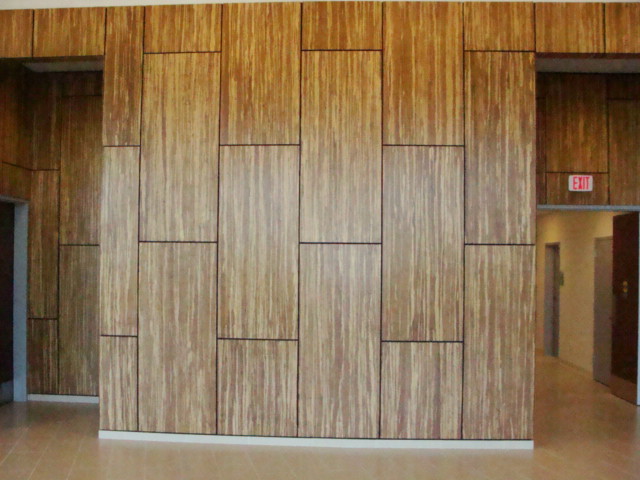
Completed in late summer 2012, the new, mixed-use building will be a significant focal point of architecture in the Quad Cities. The KONE Centre is an eight-story, 121,000-square-feet commercial office and residential condominium building located within Moline’s Bass Street Landing. The functionally designed floor plates are approximately 15,000 square feet at each level. In his new role as Project Manager, Eric Abrams was responsible for estimating, and the coordination of the construction of the new KONE Center in Moline, IL. Commenting on the application of Lamboo Tiger Strand wall panels, Eric stated that “The Lamboo Tiger Strand panel was an excellent choice selected by the Design Architect on the project. The material was within our budget and aesthetically surpassed the expectations of the design team and property owner, it was a homerun product during our value engineering process. The team at Lamboo had excellent product knowledge and was able to assist the design team in selecting the perfect material for our wall panel application. The occupants of KONE Centre are welcomed by nearly 4,500 square-feet of the renewable material, and as the project manager, I could not be more pleased with Lamboo products.”

For questions regarding Lamboo, Tiger Strand, or to schedule an interview please
visit our website at www.lamboo.us or contact us at info@lamboo.us 866-966-2999
…
“MAKING INNOVATIVE THINKING A STANDARD” – Lamboo Incorporated
“MAKING INNOVATIVE THINKING A STANDARD” – Lamboo Incorporated
Blog by: Dustin Dennison
Thursday, October 25, 2012
Sustainable Business and Green Building Projects

In an effort to protect the environment, many companies have begun developing sustainable business practices. By implementing green and sustainable practices, many have found that they can make choices that help the planet as well as their profits. Sustainable business is a relatively new concept for many companies, but it has grown in popularity and use over the past decade and considerable advances are expected for the future.
Sustainable business requirements
Not just any company that chooses to recycle is meeting sustainable business standards. There are certain requirements that must be met in order for a company to be considered part of the green business world. These include:- The business must be considered more environmentally friendly than traditional businesses
- Sustainability is at the forefront of business decision making
- An observable commitment to green practices has been implemented across the board
- Services and products offered from the business are environmentally friendly or meet the public demand for sustainable products.
One area that has been growing even more than others is green building and construction. In many instances, by creating homes, offices, and public buildings that are environmentally friendly, the costs of operating said buildings can be extremely low, and many companies are moving to this form of building.
Green building standards
The United States Green Building Council (USGBC) is the government organization in charge of overseeing the green design and function of buildings across America. By constructing buildings with efficient and supportive designs, the USGBC believes that they can help minimize the energy crisis and create jobs.The Leadership in Energy and Environmental Design (LEED) concept has changed several aspects of the way green construction and sustainable business practices are run. This international standard is offered as a reward to the building owners who operate their companies within certain standards of excellence in this field. With LEED in mind, many property owners are able to implement sustainable business practices, green construction, efficient building design, and maintain daily operations in an environmentally friendly manner.
Similarly, the United States Business Council for Sustainable Development (US BCSD) is available to help improve environmental awareness within industry, government projects, and business ventures. This non-profit organization is part of a worldwide group of councils that are partnered with the World Business Council for Sustainable Development. These organizations work across the globe to promote sustainable business initiatives on a worldwide scale, but their impact can be felt locally.
(Read More)
(Excerpt of article by the Triple Pundit. NOT AFFILIATED WITH LAMBOO)

Traditionally, building practices have focused on large scale, low cost production with little regard as to how this could be maintained in the future. This lead to many natural resources becoming strained due to over use and mismanagement. In an era of rising populations and demand for the buildings and structures to support it there becomes the need for not only more efficient building practices but also materials sustainable enough to provide a long term solution. With a maturity rate of 6-8 years (versus 25-50 with timber) Bamboo is just the resource the industry has been searching for. Bamboo is a remarkably strong plant that is not only able to rapidly replenish but also regrows without planting, saving an enormous cost associated with timber in terms of capital and energy.
Additionally, incorporating Lamboo (LVB) laminated veneer bamboo into projects can earn LEED (Leadership in Energy and Environmental Design) certification under MR Credit 6 – Rapidly renewable materials, IEQ Credit 4.4 – Low-emitting materials; ID Credit 1 – Innovation in Design (Environmentally Preferable Material), and ID Credit 2 – Innovation in Design (Life Cycle Assessment / Environmental Impact).
*Please refer to USGBC for information regarding project requirements
For more information about the advantages of Bamboo please visit our sustainability page.
For questions regarding Lamboo, our products, or to schedule an interview please
visit our website at www.lamboo.us or contact us at info@lamboo.us 866-966-2999
…
“MAKING INNOVATIVE THINKING A STANDARD” – Lamboo Incorporated
“MAKING INNOVATIVE THINKING A STANDARD” – Lamboo Incorporated
Blog by: Dustin Dennison
Wednesday, October 3, 2012
Success at ASLA 2012 in Phoenix!
The 2012 ASLA annual meeting & expo has came to a close, but the progress made there will last for years to come. At the show more than 375 companies showcased the latest innovative landscape products and projects many of which based on sustainable practices and renewable materials. Lamboo, Inc. was among the companies represented at the show in the Phoenix Convention Center which introduced us to many like minded architects and organizations in the field.

In addition to meeting architects and manufacturers there was great interest in integrating the ultra renewable resource of bamboo in various municipalities throughout the U.S. including New York City parks. It was apparent at the show that many designers and planners are searching for a sustainable alternative to traditional materials that can also perform exceptionally well in the elements but haven't had much success until now. Many of these individuals had heard of bamboo's potential but were unaware of it's availability for their applications previously.

Showcased at the booth were structural beams fabricated by G.R. Plume, curtain wall members from Dover, handrails from Gerber, as well as a trash receptacle and bench from Landmark Studio & Design. Lamboo would just like the thank these partners again for their great work and commitment to sustainability.

For additional information about the 2012 ASLA show or Lamboo materials please contact us at 866-966-2999 or info@lamboo.us


In addition to meeting architects and manufacturers there was great interest in integrating the ultra renewable resource of bamboo in various municipalities throughout the U.S. including New York City parks. It was apparent at the show that many designers and planners are searching for a sustainable alternative to traditional materials that can also perform exceptionally well in the elements but haven't had much success until now. Many of these individuals had heard of bamboo's potential but were unaware of it's availability for their applications previously.

For additional information about the 2012 ASLA show or Lamboo materials please contact us at 866-966-2999 or info@lamboo.us
“MAKING INNOVATIVE THINKING A STANDARD” – Lamboo Incorporated
Blog by: Dustin Dennison
Subscribe to:
Posts (Atom)